Fiberglass vs. Onyx vs. Tile: Which Shower Is Right for Your Bathroom Remodel?
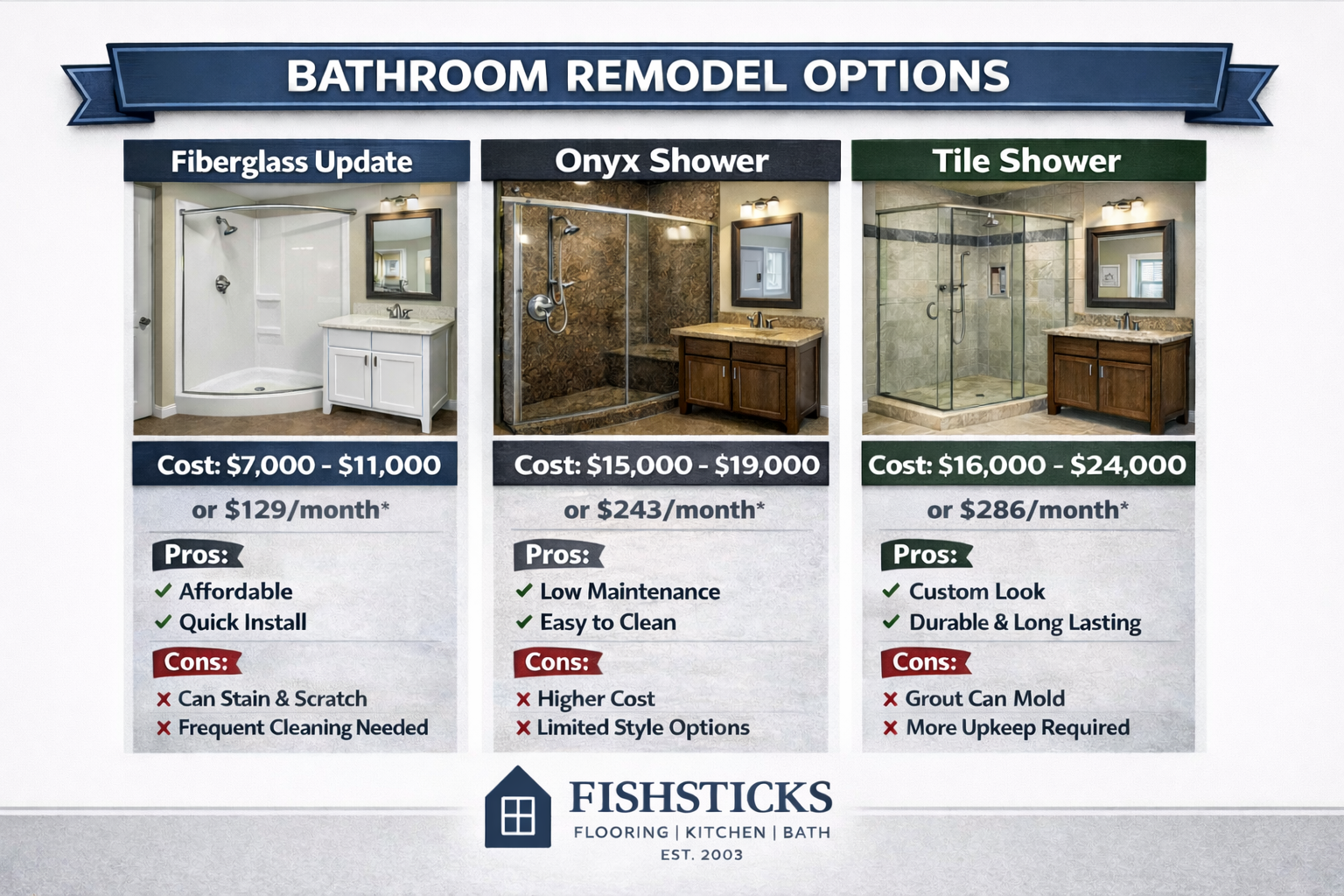
When it's time for a bathroom remodel, the shower is usually the centerpiece of the conversation. It's the thing you use every single day, and it has the biggest impact on both the look and function of your bathroom. At Fishsticks Flooring, Kitchen & Bath, we install all three major shower types — fiberglass, Onyx, and tile — and we help Waterloo, Cedar Falls, and Cedar Valley homeowners pick the right one for their space, budget, and lifestyle.
Let's break down what each option offers, what it costs, and how each one handles special requests like zero-entry (curbless) showers.
Fiberglass Showers: The Budget-Friendly Workhorse
Fiberglass shower surrounds have been the go-to option in Iowa homes for decades — and for good reason. They're affordable, quick to install, and get the job done.
What You Get
A fiberglass shower is a pre-formed, one-piece or multi-piece unit that slides into your shower opening. It's lightweight, waterproof out of the box, and available in a handful of standard sizes and configurations.
Cost
A typical fiberglass shower remodel runs $7,000 – $11,000 installed, or roughly $129/month with financing. That includes removal of the old unit, installation, and basic plumbing updates.
Pros
- Most affordable option — if budget is your top concern, fiberglass delivers
- Quick installation — less labor time means less disruption to your daily routine
- Lightweight — doesn't require structural reinforcement
- Waterproof — no grout to worry about leaking
Cons
- Can stain and scratch over time — fiberglass surfaces aren't as durable as solid surface or tile
- Requires more frequent cleaning — soap scum and hard water deposits show more easily
- Limited style options — you're working with standard shapes, sizes, and colors
- Harder to repair — cracks or chips can be patched, but it's never quite invisible
Best for: Homeowners who want a clean, functional shower on a tighter budget — rental properties, guest bathrooms, or quick refreshes where durability isn't the top priority.
Onyx Showers: The Best of Both Worlds
Onyx is a solid surface material that's manufactured specifically for bathroom applications. It sits right in the sweet spot between fiberglass and tile — giving you a premium look and better durability without the cost and maintenance of custom tile.
What You Get
Onyx panels are custom-manufactured to your shower's exact dimensions. They arrive ready to install — no cutting, no guessing. The panels are solid all the way through, so scratches can be buffed out and the color goes all the way through the material.
Cost
An Onyx shower remodel typically runs $15,000 – $19,000 installed, or around $243/month with financing. That includes custom-sized panels, shower pan, installation, and plumbing.
Pros
- Low maintenance — no grout lines means no scrubbing grout or worrying about mold
- Easy to clean — a quick wipe-down keeps it looking new
- Highly customizable — built-in shelves, caddies, benches, crown molding, decorative inlays, and a wide range of colors and textures including shiplap and subway tile patterns
- Repairable — scratches can be buffed out since the color runs through the entire panel
- Limited lifetime warranty — Onyx backs their product for the long haul
- Faster installation than tile — pre-manufactured panels go up quicker
Cons
- Higher cost than fiberglass — you're paying for better material and custom sizing
- Limited style compared to tile — while Onyx offers great options, tile still wins for truly one-of-a-kind designs with mosaics, patterns, and mixed materials
Best for: Homeowners who want a beautiful, low-maintenance shower that feels custom without the price tag or upkeep of tile. This is our most popular recommendation for primary bathrooms.
Tile Showers: The Custom Showpiece
When you want a shower that's truly one-of-a-kind, tile is the way to go. From floor-to-ceiling porcelain to intricate mosaic accent walls, a tile shower lets you create something that's uniquely yours.
What You Get
A tile shower is built from scratch — waterproof membrane, backer board, individually set tiles, and grouted joints. Every surface is hand-finished by a skilled installer. The design possibilities are virtually unlimited.
Cost
A tile shower remodel typically runs $16,000 – $24,000+ installed, or around $286/month with financing. Costs vary depending on tile selection, layout complexity, and shower size.
Pros
- Fully custom look — mix colors, sizes, patterns, mosaics, niches, and accent walls for a design that's completely yours
- Extremely durable — porcelain and ceramic tile can last decades with proper care
- Highest perceived value — tile showers make a statement and add real value to your home
- Endless material choices — porcelain, ceramic, natural stone, glass, mosaics, large-format slabs
Cons
- Grout maintenance — grout lines can collect mold and mildew if not properly sealed and maintained
- More upkeep required — periodic resealing and grout cleaning are part of the deal
- Longer installation time — tile showers take more labor than fiberglass or Onyx
- Higher cost — custom work and skilled labor add up
Best for: Homeowners who want a showpiece bathroom, value design flexibility, and don't mind a bit more maintenance for a truly custom result.
Zero-Entry Showers: What You Need to Know
A zero-entry shower (also called a curbless or barrier-free shower) eliminates the raised threshold you step over to get in. The shower floor is flush with the bathroom floor, creating a seamless, walk-in experience. They're increasingly popular — not just for accessibility, but because they look incredible and make a bathroom feel larger and more open.
What It Takes to Build One
Zero-entry showers aren't just about removing the curb. The floor needs to be engineered so water drains properly without a lip to contain it. Here's what's involved:
- Floor modification: The bathroom subfloor usually needs to be recessed or built up with a gradual slope toward the drain. In some cases — especially in older Waterloo and Cedar Falls homes — this means modifying floor joists
- Linear drain system: Most zero-entry showers use a linear drain (a long, narrow drain channel) installed along one wall. This creates an even slope across the entire shower floor rather than a traditional center drain
- Waterproof membrane: The entire shower area and surrounding floor gets a continuous waterproof membrane to prevent moisture from reaching the subfloor
- Proper slope: Building code typically requires a ¼-inch slope per foot toward the drain — precise enough that water flows out but not so steep that you feel off-balance standing in the shower
How Each Material Handles Zero-Entry
- Fiberglass: Zero-entry is difficult with standard fiberglass units. Most pre-formed pans have a built-in curb. Some manufacturers offer low-threshold or ramped options, but true zero-entry requires a custom shower pan — which starts pushing you toward Onyx or tile pricing anyway
- Onyx: Onyx is an excellent choice for zero-entry showers. They manufacture custom shower pans with built-in ramps designed specifically for barrier-free access. The pan is made to your exact dimensions with the slope built right in. This is one of the most practical and cost-effective ways to get a curbless shower
- Tile: Tile gives you the most flexibility for zero-entry design. The shower floor is built from scratch with a custom mud bed and slope, so there are no size or shape limitations. Large-format tiles or mosaics work beautifully on curbless shower floors. However, the floor prep and waterproofing add to the cost and timeline
Our recommendation: If accessibility is a priority, Onyx with a ramped shower pan is the most straightforward path to a zero-entry shower. If you want the ultimate custom look, tile gives you the design freedom to create something truly special.
Side-by-Side Comparison
*Monthly payment estimates based on financing options. Ask us about current rates.
Which Shower Is Right for You?
There's no single "best" shower — it depends on your budget, your style, how much maintenance you're willing to do, and whether you need features like zero-entry access. Here's a quick way to think about it:
- Choose fiberglass if you want the most affordable, no-fuss option and you're not too concerned about customization
- Choose Onyx if you want a premium look with minimal maintenance — especially if zero-entry accessibility matters to you
- Choose tile if you want a fully custom, design-forward shower and you're comfortable with the higher investment and upkeep
Let's Talk About Your Bathroom
At Fishsticks Flooring, Kitchen & Bath, we've been helping Waterloo, Cedar Falls, and Cedar Valley homeowners remodel bathrooms since 2003. We carry and install all three shower types, so we're not pushing one product — we're helping you find the right fit.
Come visit our showroom and see fiberglass, Onyx, and tile options in person. We'll walk you through the differences, talk through your wish list, and put together a plan and price that works for your project.
Schedule your free consultation or give us a call at (319) 987-3091. Let's figure out the perfect shower for your bathroom — together.
Because your shower should be the best part of your morning. Let's make that happen.
Ready to Start Your Project?
Let's discuss your renovation goals. Schedule a free consultation today.
Contact UsRelated Articles
How Long Does a Bathroom Remodel Take in Waterloo and Cedar Falls?
Many bathroom remodels take about two to four weeks of on-site construction once planning, selections, and ordering are done. Here is what happens before and during that time — and what can change the schedule.
Read MoreHow to Modernize an Old Bathroom in Waterloo & Cedar Falls
Many older Cedar Valley homes have cramped bathrooms, outdated tile, aging fiberglass showers, or inefficient layouts. Learn the most effective ways to modernize your bathroom with tips on flooring, showers, vanities, lighting, and layout design.
Read MoreTile vs. Luxury Vinyl Plank (LVP): Which is Best for Your Bathroom Floors?
When it comes to bathroom flooring, you need a solution that blends durability, beauty, and moisture resistance. At Fishsticks Flooring and Cabinetry, we help customers decide between tile and luxury vinyl plank for their bathrooms.
Read More