High-End Kitchen Remodels: Luxury Design Ideas, Finishes & What They Cost in the Cedar Valley
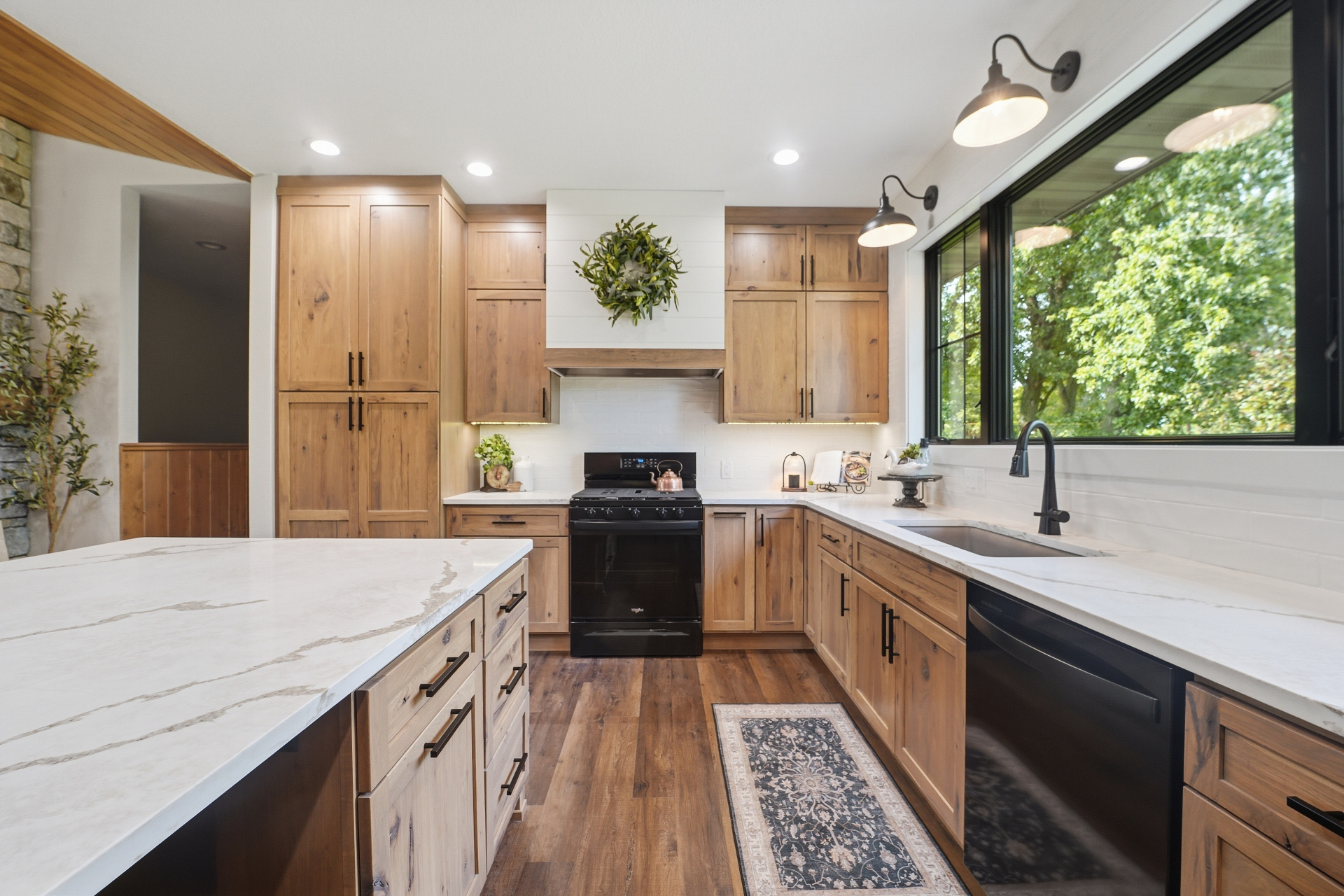
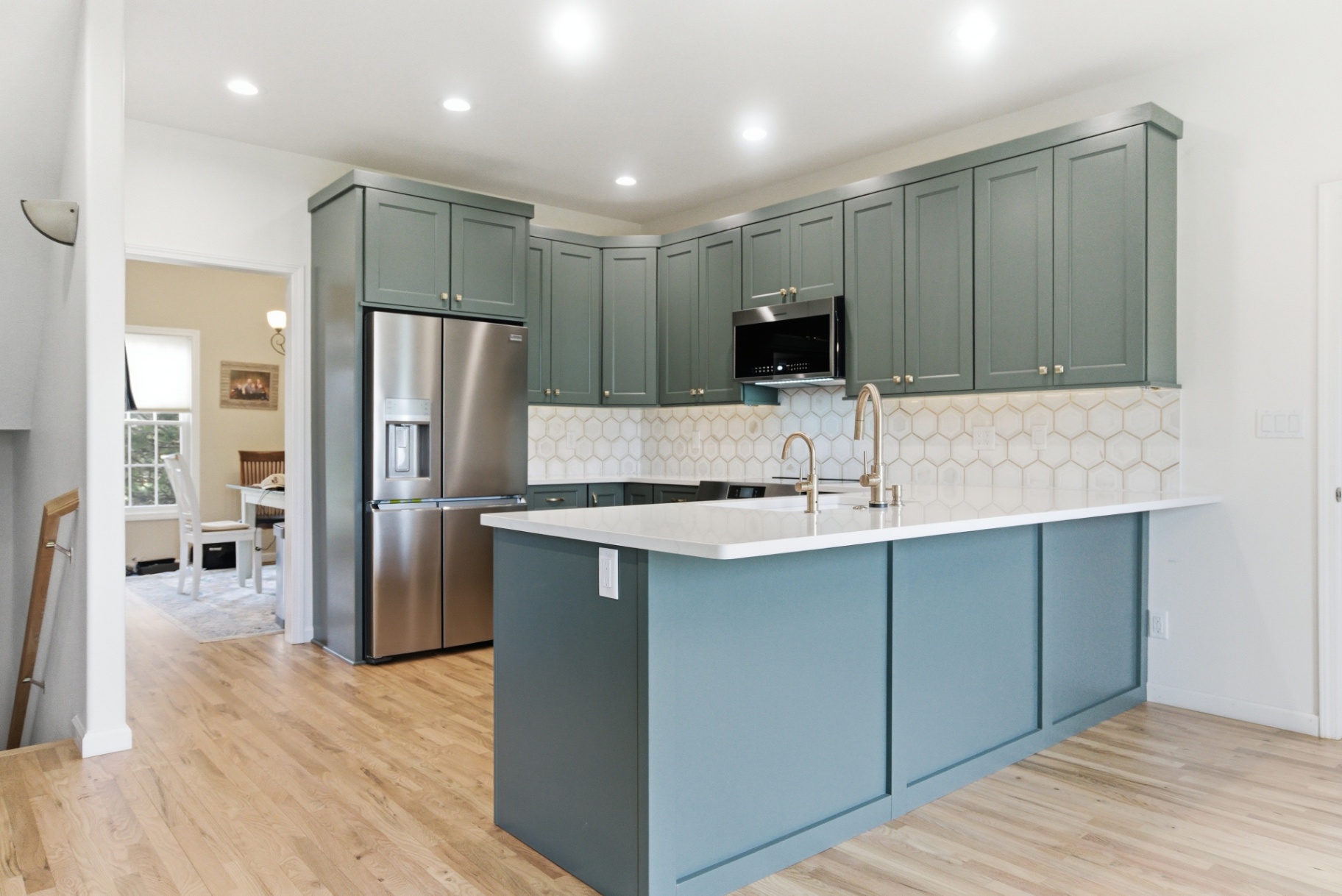
Luxury used to be a number. Today it's intention. The high-end kitchens we build in Waterloo, Cedar Falls and across the Cedar Valley aren't expensive because they're flashy — they're expensive because every inch is planned, every material is chosen for how it will look and work in ten years, and every detail is built by hand rather than pulled off a shelf.
If a high-end kitchen remodel is on your horizon, here's what actually separates a premium kitchen from a standard one, plus a realistic look at what those upgrades cost.
1. Custom Cabinetry Is Where Luxury Starts
Cabinets are the single biggest line item in almost every high-end kitchen — usually around 30% of the budget — and they're also the element you touch every day. Stock cabinets come in fixed 3-inch increments, so a designer has to fill the leftovers with filler strips. Custom and semi-custom cabinetry is built to your room.
We build with Bertch cabinetry, made right here in Waterloo, Iowa. Their Kitchen+ line offers framed construction in inset, full-overlay, or standard overlay doors — inset being the most tailored (and most expensive) look, where the door sits flush inside the frame. If you're weighing door styles, our guide on partial vs. full overlay cabinets breaks down the differences.
What makes a cabinet "high-end":
- Solid wood dovetailed drawer boxes with full-extension soft-close glides
- True enamel paint finishes — richer color, smoother surface, and far more durable than a standard sprayed lacquer
- Interior fittings: cutlery dividers, spice pull-outs, tray dividers, appliance garages, roll-out trash
- Hand-applied moldings, furniture bases and integrated panels so the refrigerator and dishwasher disappear into the run
- Mixed finishes — a stained hickory or walnut island against painted perimeter cabinets
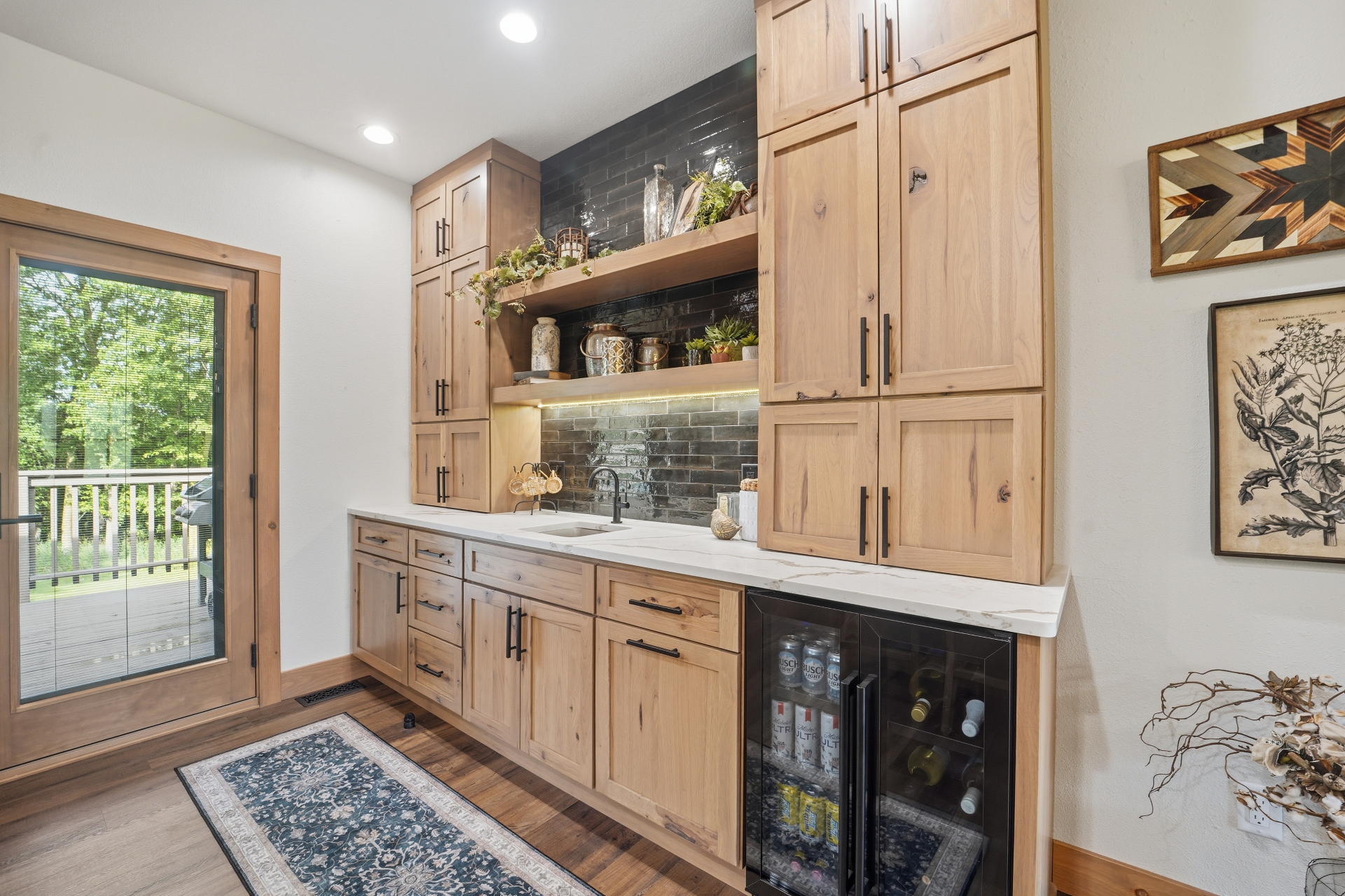
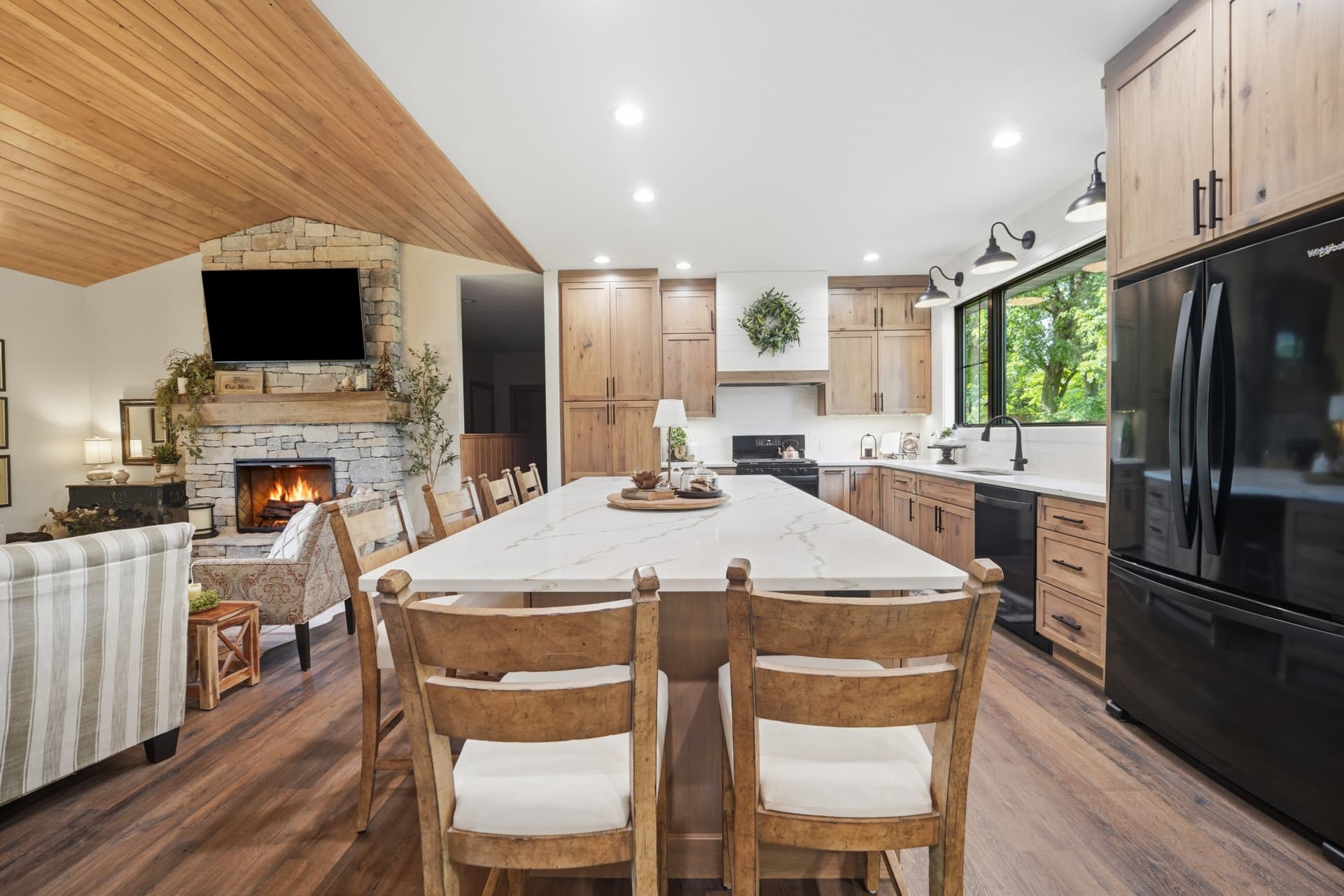
You can see all of that in our Rustic Hickory Kitchen Renovation in Gladbrook, Iowa — rustic hickory Bertch cabinetry, a custom wood hood, and a wet bar built to match.
2. Open-Concept Layouts and a Thoughtful Work Triangle
The most impactful change we make in a high-end remodel usually isn't a material — it's a wall. Removing a barrier between the kitchen and living space changes how the whole house feels and functions, especially in older Cedar Valley homes with closed-off floor plans.
But open concept only works when the underlying layout is right. A good designer still protects the work triangle between sink, range and refrigerator, keeps landing space on both sides of the cooktop, and makes sure traffic doesn't cut through the cooking zone. Structural changes require engineering, headers, and sometimes rerouting HVAC and plumbing — budget for it early rather than discovering it mid-project.
3. Premium Countertops: Quartz, Quartzite and Waterfall Edges
Countertops are the hardest-working surface in the kitchen. Premium quartz remains the most-requested high-end choice because it delivers marble-style veining with no sealing, no etching from lemon juice, and no babying. Natural quartzite and honed granite are the step up for homeowners who want a one-of-a-kind slab.
The upgrades that read as "luxury":
- Waterfall edges where the slab runs down the side of the island to the floor
- Mitered edges that make a 3cm slab look 4 inches thick
- Full-height slab backsplashes behind the range instead of tile
- Book-matched veining across the island and backsplash
4. The Statement Range Hood
Instead of hiding ventilation, high-end kitchens celebrate it. A custom hood in wood, plaster, or metal becomes the architectural centerpiece of the room — the thing your eye lands on when you walk in. Pair it with a professional-grade range and a properly sized blower (ducted to the exterior, always) and it performs as well as it looks.
5. Butler's Pantries, Wet Bars and Hidden Storage
A butler's pantry — or scullery — is a staging area off the main kitchen for storage, prep, and keeping the mess out of sight when you're hosting. It's one of the fastest-growing requests we get. A wet bar with a beverage fridge, floating shelving and its own backsplash does the same job in less square footage, and it keeps guests out of the cook's workspace.
6. Layered Lighting
Lighting is the most underestimated element in the room. One overhead fixture flattens everything. A layered plan gives you a different kitchen at 7am than at 9pm:
- Ambient — recessed cans or a ceiling fixture on a dimmer
- Task — under-cabinet LED strips over every work surface
- Accent — in-cabinet glass lighting, toe-kick lighting, interior shelf lighting
- Decorative — pendants over the island that act as jewelry for the room
7. Flooring That Ties It Together
In an open-concept remodel your flooring runs through the whole main level, so it has to hold up and it has to look right with the cabinetry. Site-finished or engineered hardwood in a wide plank, large-format porcelain, or a premium rigid-core LVP are the three we specify most. See our comparisons on real vs. engineered hardwood and wood-look floors for kitchens.
What a High-End Kitchen Costs in the Cedar Valley
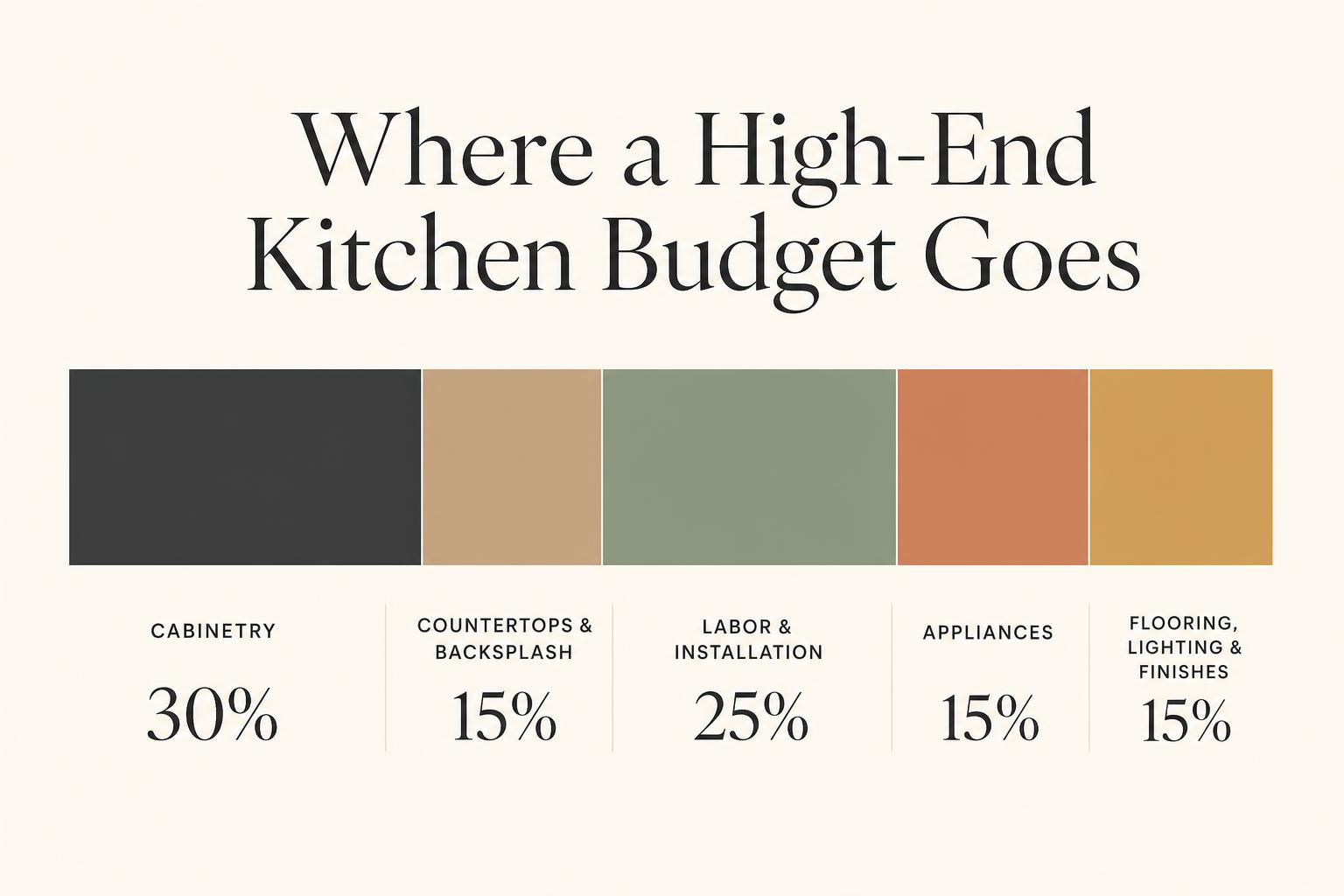
Real numbers from our own recent projects: a mid-range kitchen refresh runs $30,000–$50,000. A full high-end kitchen renovation with custom cabinetry, structural changes and premium surfaces typically lands between $60,000 and $90,000+. Our Waterloo kitchen renovation was a $60,000 kitchen over three weeks; the Gladbrook hickory kitchen was an $84,000, seven-week build including the wet bar and open-concept work.
Here's roughly how that budget divides up:
See These Projects in Detail
Browse the full photo galleries, timelines, and material breakdowns for the two Cedar Valley kitchen renovations referenced above.
Two notes on that chart. First, labor is not the place to economize — inset cabinetry, mitered countertops and full-height tile are only as good as the installer. Second, the 15% for "flooring, lighting and finishes" is where projects quietly overrun, because it's the category people plan last.
Where to Spend and Where to Save
- Spend on: cabinetry construction, layout and structural changes, countertops, installation quality, and anything inside a wall.
- Save on: decorative pendants and hardware (easy to swap later), a second dishwasher you won't use, and specialty appliances you're buying for resale value rather than how you actually cook.
Start With a Plan, Not a Product
The best high-end kitchens don't start with a countertop sample — they start with how you live in the room. Our designers walk your space, build 3D renderings so you can see the finished kitchen before demo day, and specify every material up front so there are no mid-project surprises. If you're wondering about timing, read when to start planning your kitchen remodel.
Ready to talk about yours? Browse our featured kitchen renovations, then get in touch with Fishsticks Flooring, Kitchen & Bath in Waterloo. We'll make your house feel like home.
Project Gallery
Ready to Start Your Project?
Let's discuss your renovation goals. Schedule a free consultation today.
Contact UsRelated Articles
How Much Does a Kitchen Remodel Cost in Waterloo and Cedar Falls?
Fishsticks' planning ranges run from about $15,000 for a focused kitchen refresh to $60,000–$100,000+ for a high-end renovation. Here is what drives the price, with real Cedar Valley project budgets.
Read MoreWhen Should You Start Planning Your Kitchen Remodel? A Fishsticks Guide for Cedar Valley Homeowners
Wondering when to start planning your kitchen remodel? Learn the ideal timeline, what to expect at each stage, and why a little planning goes a long way — from the Fishsticks team in Waterloo, Iowa.
Read MoreWhere to Start With a Kitchen Renovation Project: A Step-by-Step Guide for Homeowners
Not sure where to start your kitchen renovation? Learn the first steps, budgeting tips, and design guidance from Fishsticks Flooring, Kitchen & Bath.
Read More